Overtoun House: a Scottish Tale of Toxic Waste, Devil Children, and Dog Deaths
A house can be haunted, cursed, or just have plain bad luck – but neither of those seem to fit the case of Overtoun House.

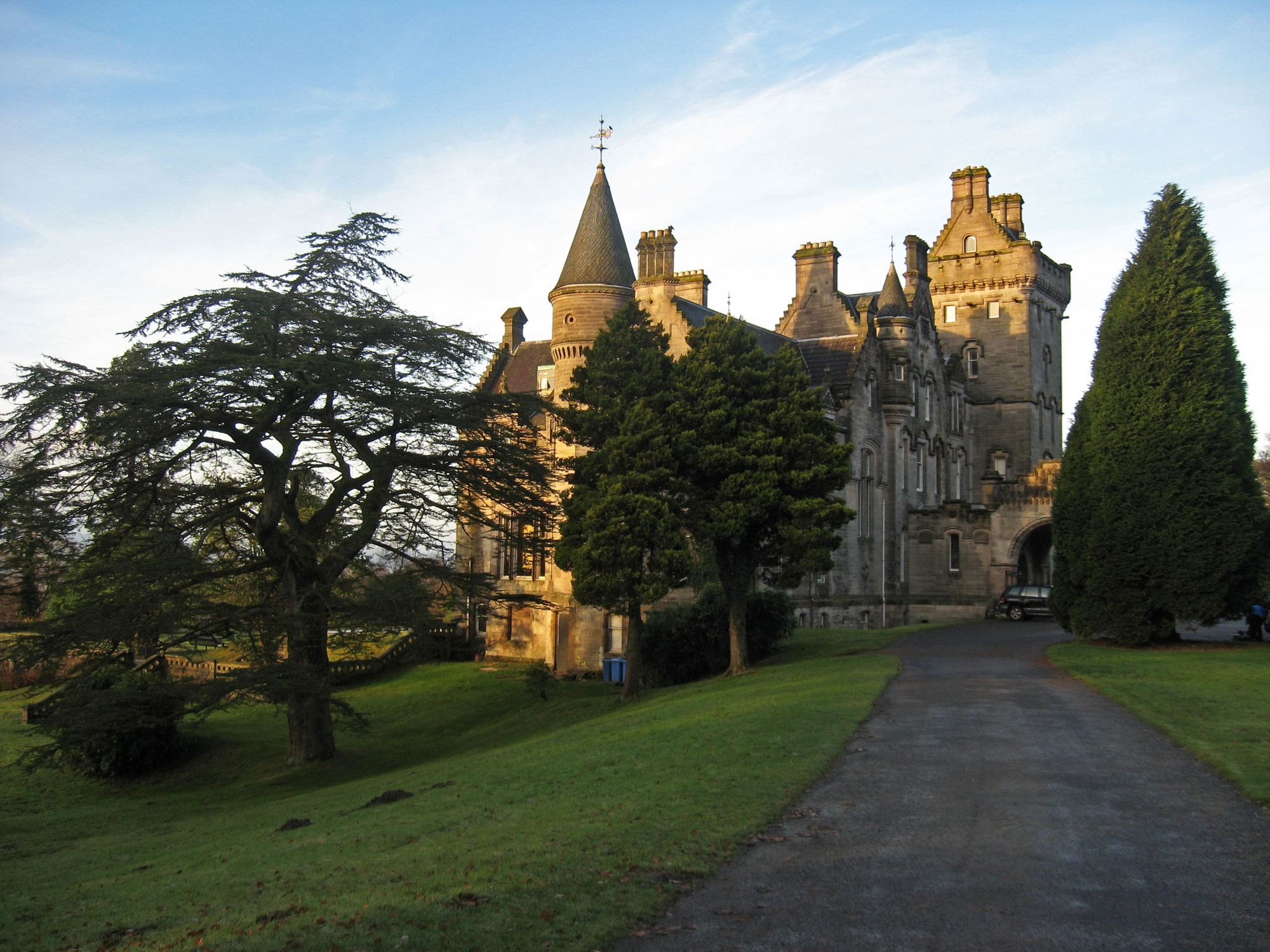
A house can be haunted, cursed, or just have plain bad luck – but neither of those seem to fit the case of Overtoun House in Dumbarton, Scotland, whose history and connections are plagued with misfortune.
But its story begins elsewhere near Glasgow, twenty miles from the country seat at Shawfield House in Rutherglen.
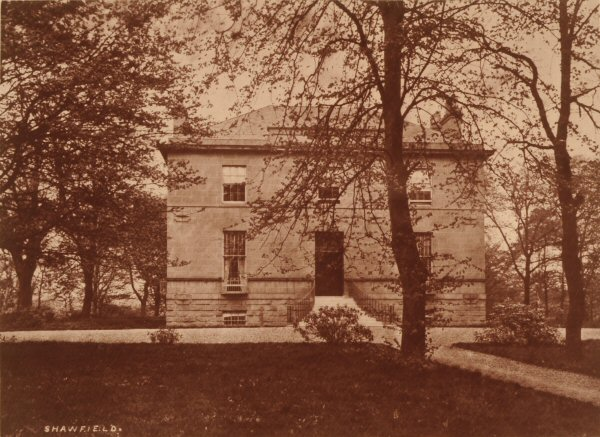
Shawfield House was built in 1710 for Daniel Campbell (1671 - 1753), a Scottish slave trader and politician nicknamed "Great Daniel" due to his weight and personal fortune. It was sacked by rioters in 1725 who objected to his support for a tax that raised the price of whisky and Great Daniel was so heavily compensated for the damage that he was able to purchase the entire island of Islay. He left Shawfield and within a century it had passed into the hands of a businessman named John White.
White's Dead Men
J & J White Chemicals, also referred to as Shawfield Chemical Works, was established in Rutherglen in 1820 by John White and his brother after their father's soapmaking business failed. Under John White I, the chemical manufacturing business flourished and their premises expanded over the previously rural estate.
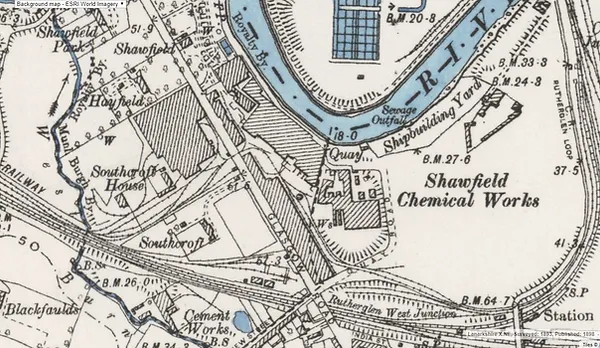
The Whites made their fortune with the manufacture of bichromate of potash: a chemical reagent used in tanning, painting, printing and dyeing that is acutely and chronically harmful to health. By the time the company passed to family son John White II in 1887, a heavily religious man trained in law, working conditions in the plant were notoriously horrid even by Victorian standards.
Lionel Ritchie (I'm not joking), wrote of him in the Oxford Dictionary of National Biography:
"[John White] would be remembered solely for his peerless philanthropy and Christian zeal were it not for the fact that the source of his wealth was a chemical works where the wages and working conditions were scandalous."
On Sundays, White led the Sunday Rest and Lord's Day Observance Society, but his workers were not allowed this luxury. Insisting on a seven day working week, he docked his workers' wages if they took time off for church: the millions he donated to Glasgow's charitable causes came at least in part from paying his workers some of the lowest wages in the country.
Even worse, the chemical factory and its nonexistent safety regulations was exposed in 1898 by Labour politician Keir Hardie in a series of pamphlets entitled White Slaves. Workers at J & J White Chemicals were forced to operate in unventilated areas without effective protective equipment, and suffered from a perforated or ulcerated septum as well as "chrome holes", lacerations of the flesh which are sometimes deep enough to show bone. As workers trudged the long march home, covered in toxic dust, they became known locally as "White's Dead Men".
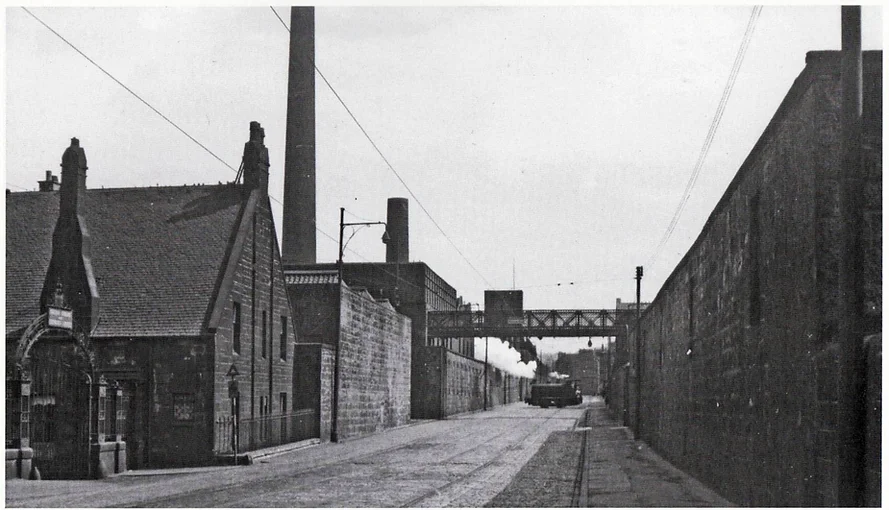
From The Labour Leader, January 1899:
I wish I could adequately describe a day’s work, so that my readers could fully understand its horrors. The men in the day shift go into begin work at six in the morning. The vapours and fumes from the chemicals are all about them all the time, eating away the cartilage of the nose and poisoning the blood, so that the stomach in time will only contain certain kinds of food... A dry dust floats in the atmosphere, which gets into the throat and produces an arid, burning feeling. The surroundings, as stated, are all of the gloomy depressing kind. Once every hour the two men who work the furnace have to draw their charge of molten chemicals. At this time a sweet, poisonous gas is thrown off, which the men inhale every time they breathe…
And this goes on all the day without a break until six o’clock in the evening. Twelve weary, wretched hours... no meal hours allowed these men... Food has to be snatched in mouthfuls as best the men can whilst carrying on their never-ceasing task. With their hands soiled with the poisonous chemicals they handle, inhaling a poison-laden atmosphere, they ‘dine’ in the fashion here stated... If a man dares to stay away from work on Sunday to attend Church or Chapel he is punished by being compelled to lose Monday’s wages also…
Ten years after the publication of this report, the public scandal and increasingly active trade union forced White to build new facilities, providing his workers for the first time a place to dine and go to the lavatory. But his legacy was not only cancerous to the bodies of his workers and their loved ones: it was in the soil.
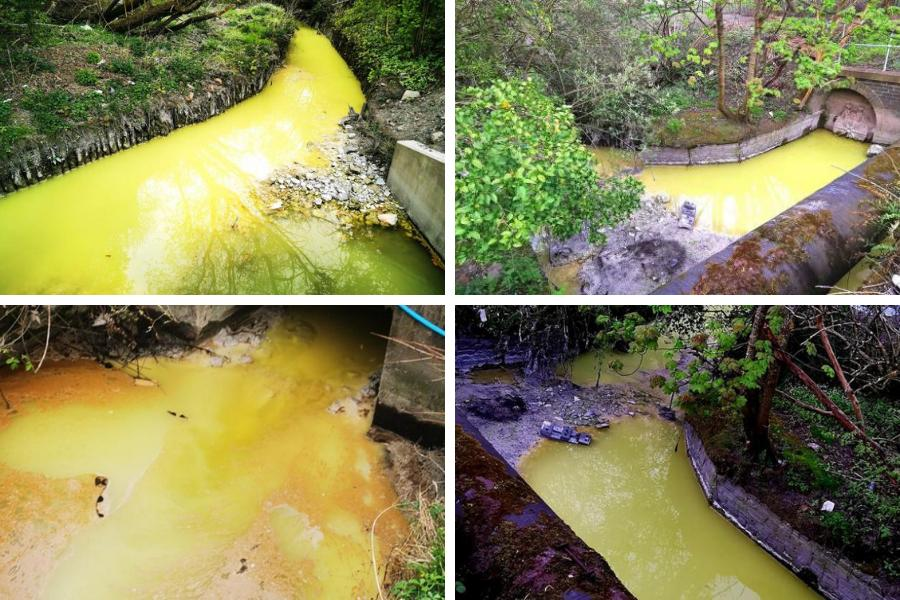
After more than a hundred years and 2.5 million tonnes of toxic waste, the town of Rutherglen now stands on land contaminated by carcinogenic by-product hexavalent chromium (Chromium VI), the same stuff at the heart of Erin Brockovich. The most prominent dumping ground identified was an area of parkland and playing fields known locally as 'the Toxic': other sites thought to be affected include school playgrounds, sports fields, a maternity hospital and nursing homes. The now defunct Shawfield Stadium, home of greyhound racing in Scotland where dogs were found drugged with cocaine, cannot be redeveloped until a building survey states it is safe to do so. The stadium stands directly on the historical boundary between the City of Glasgow and Lanarkshire, which meant that during World War II Shawfield was allowed to accommodate 20,000 spectators, whereas Celtic Park, less than a mile away but located inside Glasgow, was permitted only 10,000. In 1957, a match between Clyde and Celtic attracted 27,000 spectators and ended in the catastrophic collapse of a boundary wall in a crowd surge after a goal, in which fifty people – mostly children – were injured, with one fatality of a nine year old boy. Alongside the stadium, Rutherglen's water table is almost irreversibly poisoned, with chemicals entering the Clyde tributary turning the water yellow as late as 2021.
In 1906, John White II purchased land in Dalmuir for £5,000 to create a public park in his name. Nowadays it is referred to simply as Dalmuir Park, but he had slightly more success converting the Shawfield works' 12-acre main toxic waste dumping site into a public park for Rutherglen. Here, instead of bearing his own name, Overtoun Park is named for the estate he purchased twenty miles west, far away from the toxic conditions he forced his workers to endure.
Lord Overtoun
Overtoun House was built in 1859 by James White, the second J in J & J White Chemicals, on farmland intended to serve as a country retreat far away from his family's birthplace, now turned into a chemical hellscape.
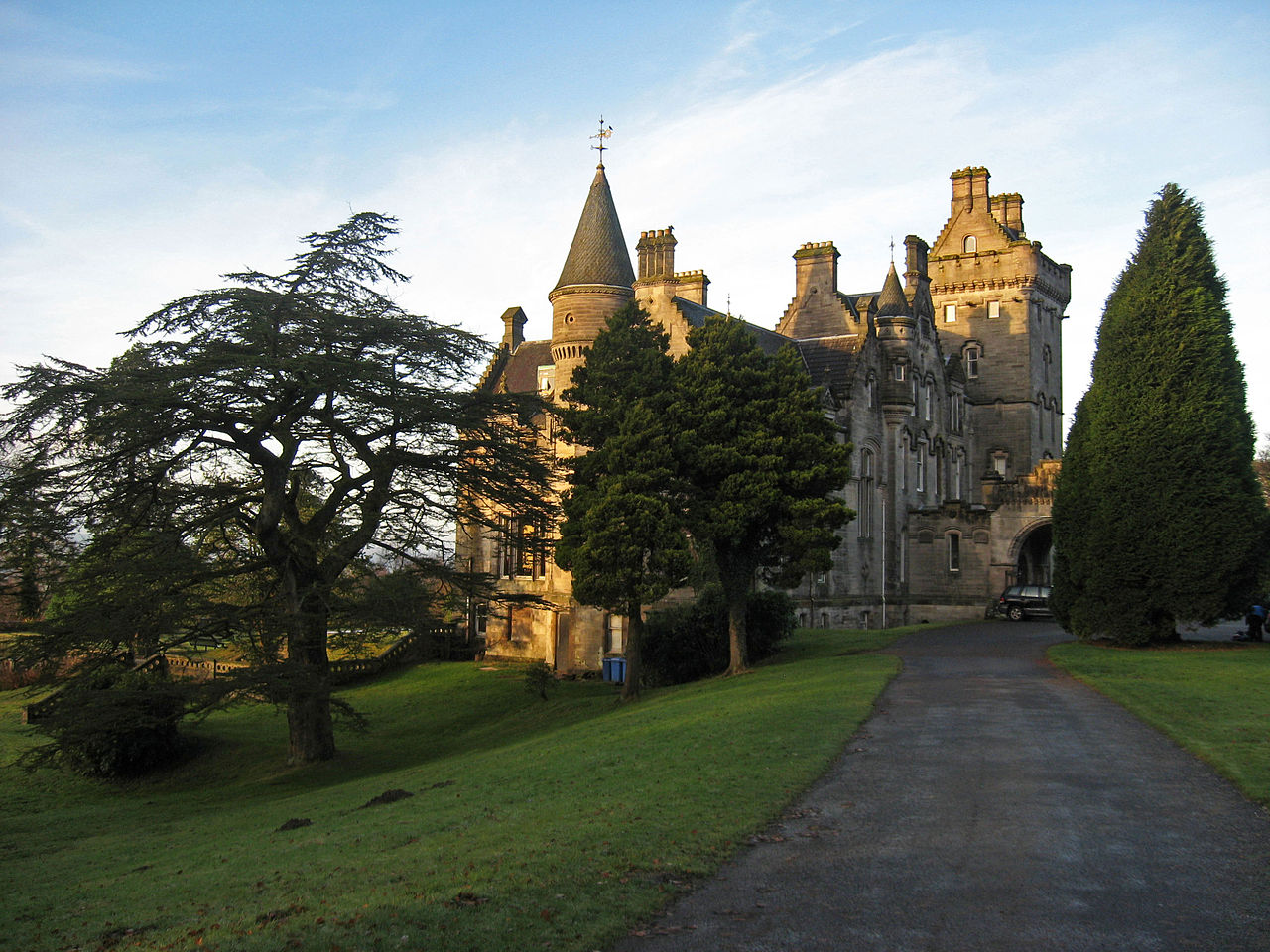
For its design and construction James hired Glasgow-based architect James Smith, whose daughter Madeleine was at the time undergoing a murder trial for allegedly poisoning her older lover. Following the scandal, and the revelation that Madeleine was most likely guilty, the architect died heartbroken in 1863 at only 55 years old, leaving his partners to complete construction of Overtoun House.
John White II moved to the estate in 1891 after the death of his parents, with plans for expansion. After purchase of nearby land, which was separated from the estate by a waterfall on the Overtoun Burn, he connected the two sides with the ornate and scenic Overtoun Bridge on the approach road: yet this wasn't enough to secure his legacy. He died childless in 1908 at the age of sixty-five, and the barony died with him.
Throughout the following years, Overtoun was home to injured soldiers and locals during the wars, subsequently becoming a maternity hospital. A terrible fire destroyed much of the property in 1948: although there were no deaths, this would simply be a footnote in the bizarre and unfortunate events that would subsequently plague the house.
The "Bridge of Death"
Shortly after the fire in the 1950's, the bridge at Overtoun House gained itself a reputation for a disturbing and harrowing phenomena. Dogs belonging to walkers and owners of the house have inexplicably been overcome, throwing themselves over into the dark waters.
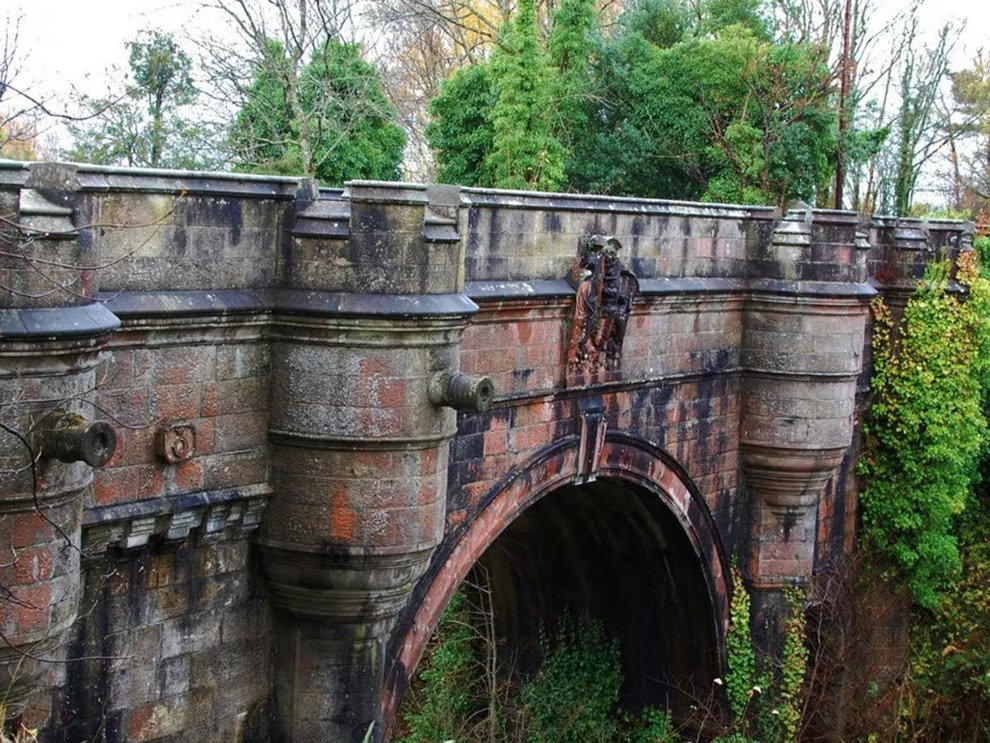
“At first she froze, but then she became possessed by a strange energy and ran and jumped right off the parapet.” - Lottie Mackinnon
The burn is unforgiving, jagged rocks lurking in its depths and a strong current carrying casualties away before the dogs can be helped. Local researchers estimate more than 300 dogs have jumped, tabloid reports say it’s 600. Known fatalities number around 50.
Explanations are rife: from the sight nesting birds and pine martens working the dogs into a frenzy so they break their leads and leap, to a misleading slope causing them to lose their grip. Another is the presence of a sound only dogs can hear, caused by the wind whistling through the bridge's unique Gothic features, or chemical or psychic interference caused by nearby pylons or the nuclear base at Faslane.
Of course, the other explanation is always paranormal, and this is the one that has proved to be most popular: not least because pine martens and dog whistles cannot be implicated in the tragic death of an infant on the bridge in 1995.
Kevin Moy, 32, was found not guilty by reason of insanity and detained at the state hospital in Carstairs, after throwing his two week-old son from the bridge because he thought he was the Devil.
The High Court in Glasgow heard how Moy came to believe that the Devil had put a birthmark on the boy's head and that the infant was to blame for the Gulf War. He also feared they would destroy the world by infecting mankind with a virus, and by killing himself and his son, they would save the world.
Moy had worked as a lab technician until he contracted ME eight years prior and suffered depression. He and his wife took the baby, named Eoghan, on a day out on a rainy October afternoon when Moy suddenly dropped the baby 42ft into the waters below then tried to throw himself over, but was dragged back by his screaming wife. Bystanders flocked to try and save the baby in vain, while Moy was restrained at Overtoun House, where he grabbed a kitchen knife and tried to slash his wrists before he was arrested.
The bridge now bears several caution signs, and superstitious locals attribute its bad fortune – in part, at least – to the spectral White Lady of Overtoun.
Ghostly Sighting
After his death in 1908, John White's widow, Grace Eliza McClure, lived alone in grief at Overtoun House on a pile worth millions which she attempted to fragment by giving overtly to good causes. After her death in 1931, her ghost is said to haunt her old home.
Whether pareidolia or paranoia, the house's Tripadvisor page is full of ghostly figures and faces in its windows, as well as first-hand accounts of unexplained emotional changes felt while on the property.
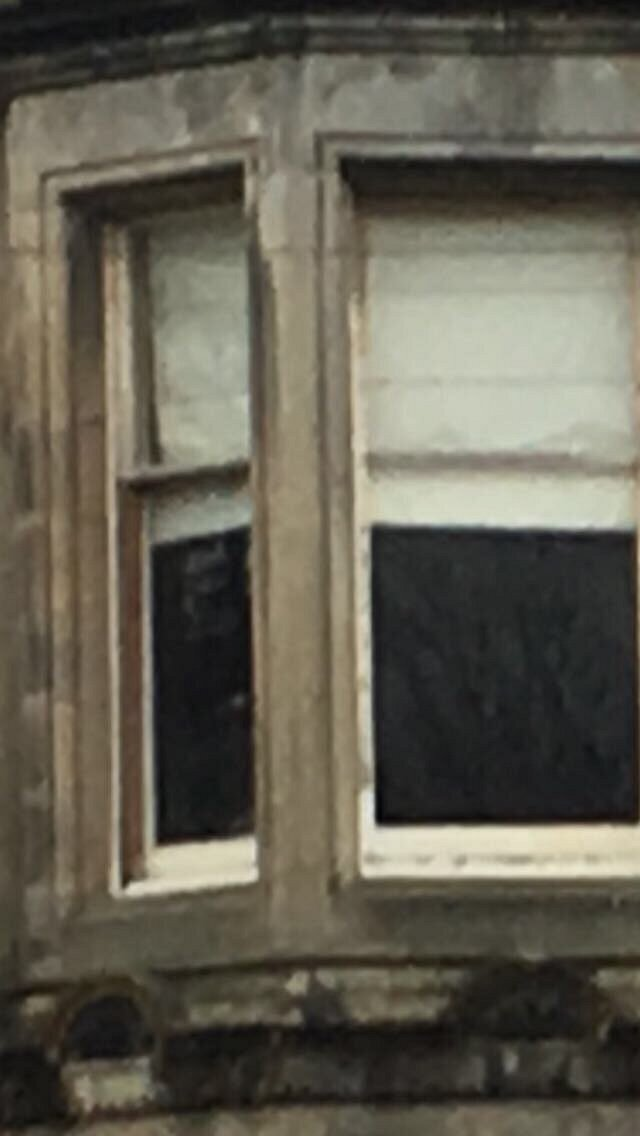
No matter your own beliefs, the house has continued its spiritual activity long after the death of its zealously religious former owner: from 1978 to 1980, a religious group, the Spire Fellowship, utilised the home, and from 1981 to 1994, the estate was used by a group named Youth with a Mission. It is now a Christian centre, with a very nice tearoom. Dog owner Alice Trevorrow, whose spaniel thankfully survived plunging off the bridge, went on to found the Sparkle of Light Spiritual Church in nearby Helensburgh.
Yet the pervading sense of calm and peace many visitors report isn't enough to dissuade tourists and locals from investigating Overtoun House and its literally toxic past. Within its beautiful surroundings, the place may be more dangerous than it looks.
Sources:
https://www.scottish-places.info/features/featurefirst93851.html
https://labourlist.org/2015/09/100-years-on-keir-hardie-the-journalist/
https://www.glasgowtimes.co.uk/news/19260608.sepa-called-investigate-toxic-glasgow-burn/
https://www.independent.co.uk/news/long_reads/dog-suicide-bridge-scotland-dumbarton-scottish-gorge-a8849146.html
https://www.heraldscotland.com/news/12666222.father-who-threw-devil-baby-from-bridge-sent-to-carstairs/
https://www.odt.co.nz/news/world/scotlands-bridge-death
https://www.tripadvisor.co.uk/Attraction_Review-g186588-d8666821-Reviews-Overtoun_House-Dumbarton_West_Dunbartonshire_Loch_Lomond_and_The_Trossachs_Nation.html